Pacifiers, Oral Development and Communication
Author: Kristina Rautek Potočnik, BA (Hons) Educational Rehabilitation, HDip Early Childhood Studies, MA Early Intervention & Inclusion, MA Therapeutic Pedagogy | Cert. Play Therapy | Sensory Integration (SI) | ASD | Primitive Reflexes | ABA | Currently undertaking Master’s studies in Comprehensive Speech Therapy and Clinical Neuropsychology & Neuroeducation, and Postgraduate Studies in Teaching.
Pacifiers can play an important role during infancy. Sucking is a natural reflex and, for many babies, it provides comfort, security and a way to settle during periods of tiredness, discomfort or distress. For this reason, pacifier use is common in many families and can be particularly helpful during sleep, teething or moments when a baby needs additional soothing.
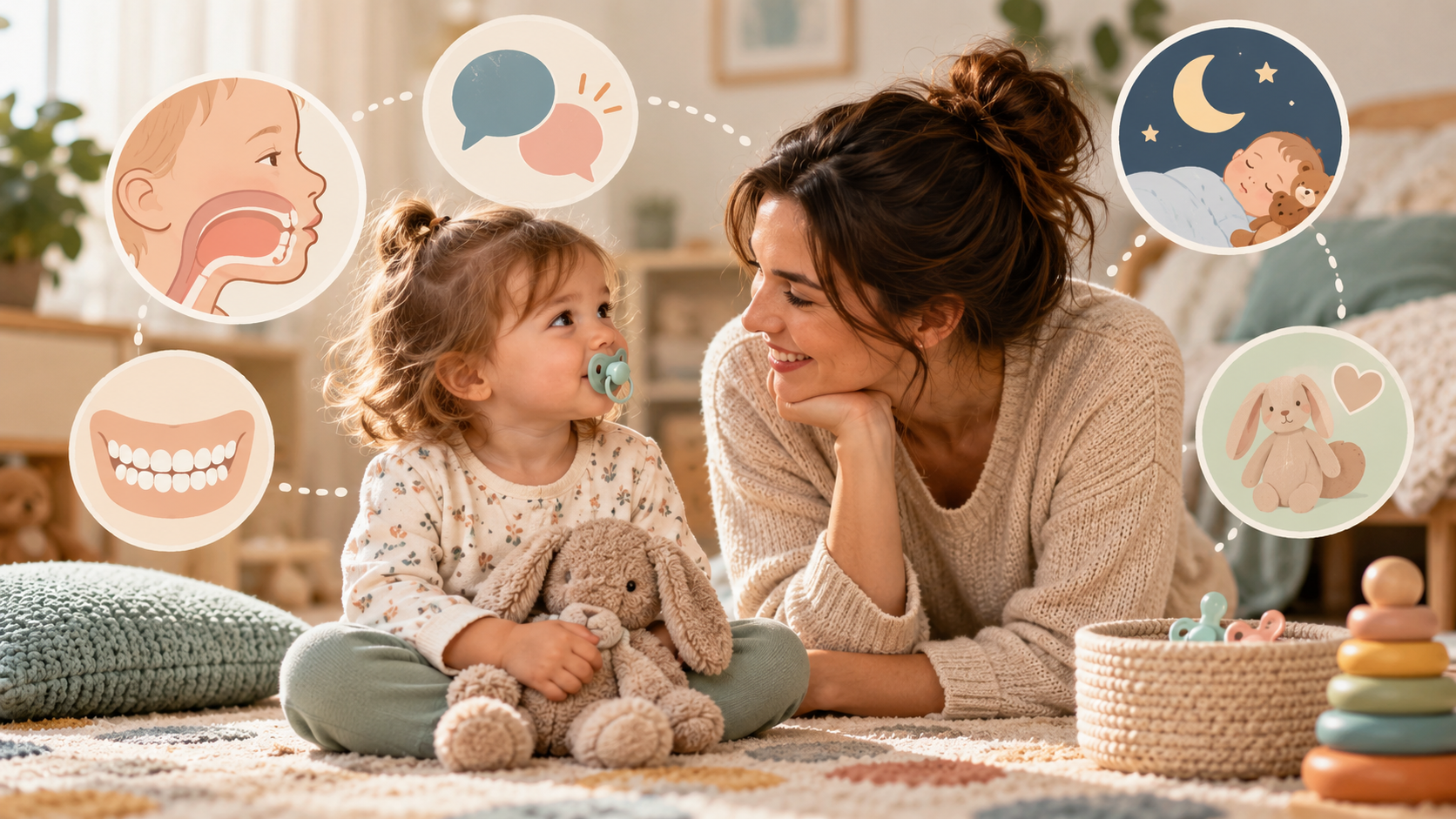
The main concern is not simply whether a child uses a pacifier. The more important factors are how often it is used, for how long it is used and whether it continues to be needed as the child grows. As development progresses, the mouth has an increasingly complex role. It is involved not only in feeding, but also in chewing, swallowing, tongue movement, facial movement, breathing patterns and later speech production. Because of this, prolonged and frequent pacifier use can become relevant to both oral development and communication.
The article from Centar za rani razvoj explains that long-term pacifier use can contribute to dental changes such as an anterior open bite, a narrow upper jaw and crossbite. These changes are more likely to become a concern when sucking habits continue for long periods and when the pacifier remains in the mouth for much of the day. Not every child who uses a pacifier will experience these difficulties, but frequency and duration are important factors to consider.
The relationship between pacifiers and oral development
During the early years, the structures of the mouth and face are still developing. The tongue, jaw, lips and palate are constantly adapting to feeding, chewing, swallowing and other oral movements. When a pacifier is used for extended periods, particularly during the day, it may influence the resting position of the tongue and the way the teeth and jaws develop.
The source article highlights possible dental consequences of prolonged use, including changes in bite and jaw shape. This is one of the reasons why pacifier use is generally best viewed as a temporary soothing tool rather than something that remains present throughout the child’s waking hours.
There is also an important distinction between occasional use and continuous use. A child who uses a pacifier mainly to fall asleep is in a different situation from a child who keeps it in the mouth for much of the day. The second pattern creates more constant pressure on the oral structures and also reduces the amount of time the mouth is free for other movements.
Pacifiers and communication
Pacifier use does not automatically cause speech or language delay. Communication development is influenced by many factors, and it would be inaccurate to suggest that pacifier use alone determines how a child’s speech develops.
However, the way a pacifier is used can affect opportunities for communication.
When the mouth is occupied for long periods, the child has fewer opportunities to experiment freely with babbling, vocal play, sound imitation and spontaneous speech. This is especially relevant during play and interaction, when young children naturally practise communication.
Children learn language through repeated social interaction. They watch faces, hear sounds, copy movements, take turns, vocalise, gesture and gradually connect sounds with meaning. Keeping the mouth free during active play and social engagement allows the child more freedom to participate in these exchanges.
This does not mean that the pacifier must be removed every time the child makes a sound. It means that as the child develops, it becomes useful to create more periods during the day when the mouth is free, especially during communication-rich activities.
Regulation remains important
One of the reasons pacifier weaning can be difficult is that the pacifier often serves a genuine regulatory function. For some children, it is closely connected with sleep. For others, it becomes a familiar response to tiredness, frustration, uncertainty or changes in routine.
Removing a pacifier without considering this function can make the process unnecessarily difficult.
The aim is not simply to take away a comfort strategy. It is to help the child gradually develop additional ways of calming and regulating. These may include physical closeness, predictable routines, movement, cuddling, a comfort object, quiet play or familiar bedtime rituals.
When these alternative forms of regulation become stronger, the child may become less dependent on the pacifier.
The source article also recommends gradual reduction rather than abrupt removal. This approach is often easier for both the child and the family because it allows time for new routines to become established.
Why daytime reduction is often the best first step
A practical starting point is often to reduce pacifier use during the day before addressing sleep.
Daytime use can usually be limited during play, meals and social interaction. These are the times when children are most active in learning, exploring and communicating. Removing the pacifier during these periods gives the child more opportunity to use facial expressions, vocalisations, sounds and words.
This also helps create a clearer distinction between the pacifier as a soothing tool and the pacifier as a constant habit.
If the child is still using it for sleep, this can remain unchanged initially. Gradual reduction is often easier when only one part of the routine is changed at a time.
The source article recommends reducing use after around six months and increasingly restricting it to sleep or specific calming situations as the child gets older.
Bedtime use often needs more preparation
Sleep is commonly the area where children are most attached to the pacifier.
This is understandable because bedtime routines are built through repetition. If a child has used a pacifier every night for a long period, the association between the pacifier and falling asleep can be very strong.
For this reason, bedtime weaning usually works better when other parts of the sleep routine are strengthened first.
A predictable sequence such as bath, pyjamas, story, quiet lighting, cuddling and a comfort object can gradually become more important in helping the child settle. Over time, the pacifier becomes only one part of a broader routine rather than the main way the child regulates before sleep.
When families move too quickly without strengthening other calming routines, the child may struggle because the familiar regulatory support has been removed before another one has taken its place.
Avoid shame during weaning
Pacifier use is a developmental habit, not a character problem.
Children should not be made to feel embarrassed or criticised because they still rely on one. Negative comments may increase stress around the process and make the child more emotionally attached to the pacifier.
A calm, predictable and consistent approach is generally more effective.
The adult’s role is to set clear boundaries around when the pacifier is available, while also supporting the child with other forms of comfort and regulation.
This is especially important for children who are sensitive to change or who rely strongly on routines. In these cases, preparation and predictability can make the transition significantly easier.
The type of pacifier also matters
The source article discusses differences between pacifier types and recommends attention to shape and material.
Orthodontic pacifiers are designed with oral development in mind, while silicone and latex versions differ in durability and flexibility. Silicone is generally more resistant and easier to sterilise, while latex is softer but may change shape more quickly.
Even so, no pacifier design completely removes the potential effects of prolonged use.
The most important factors remain how long the pacifier is used each day and how many months or years the habit continues.
Pacifier use compared with thumb sucking
Another consideration is what may happen if the pacifier is removed too quickly.
Some children may replace the habit with thumb sucking. This can be more difficult to manage because the thumb is always available and cannot be gradually restricted in the same way.
For this reason, pacifier reduction should not always be rushed.
If a child still has a strong need for sucking, gradual change may be preferable to suddenly removing the pacifier and unintentionally encouraging a more persistent thumb-sucking habit.
The source article also recognises this difference and notes that pacifier use can be easier to control than thumb sucking.
Looking at the whole developmental picture
Pacifier use should always be considered as part of the child’s wider development.
Parents can observe how and when the pacifier is being used. A child who mainly uses it at bedtime has different needs from a child who depends on it throughout most of the day.
It can also be helpful to consider whether the pacifier remains in the mouth during play and conversation, whether the child removes it naturally to speak, whether it affects meals, and whether there are concerns about dental development or oral habits.
These observations help families understand whether the pacifier is still functioning as a useful comfort tool or whether it is beginning to interfere with other areas of development.
A balanced developmental approach
Pacifiers can be helpful, particularly during infancy.
They can support calming, sleep and comfort, and there is no need to view their use as automatically problematic.
The goal is to use them intentionally and to recognise when the child’s developmental needs are changing.
As children grow, they need increasing opportunities to communicate, move their mouths freely, practise chewing, experiment with sounds and develop other ways of regulating their emotions.
A balanced approach therefore involves gradually reducing unnecessary pacifier use, particularly during the day, while continuing to support the child’s need for comfort and predictability.
The most useful question is not whether pacifiers are simply good or bad.
It is whether the way the pacifier is currently being used still fits the child’s stage of development.
Latest Posts
- How children make sense of the world through their senses
- How your baby learns about the world through their senses
- Helping your child grow stronger through movement and play
- Understanding How Early Intervention Helps Children Learn, Move, and Connect
- How to Recognise Tactile Defensiveness and Help Your Child Feel Safe
- Understanding Feeding Challenges and How to Support Your Child at Home
- Let’s Talk Sitting: Exploring Floor Seating Options
- Retained Primitive Reflexes: The Hidden Cause Behind Developmental Struggles
- Where Curiosity Blossoms: How Children's Play Nurtures Growth for All
- Helping Your Child Through Stress: A Gentle Guide for Parents
- Sweet Little Lies – How to Recognise and Respond with Care
- Chores Are More Than Just Tasks – They’re a Tool for Growing Independence, Focus, and Confidence
- How to Help Children Develop Emotional Intelligence
- Blending Technology and Care: How VR Meta Quest Supports Children at NeuroNest
- A simple guide for parents who want to raise confident, happy children
- Setting Boundaries with Love: A Simple 3-Step Guide for Parents
- Understanding Behavior Through the Nervous System
- A Compassionate Lens on Dysregulation in Non-Speaking Autistic Individuals
- Supporting Development Through Movement: The Role of the Swing in Early Intervention
- Blending Tradition and Innovation: How NeuroNest Supports Your Child’s Unique Journey
- When Movement Meets Innovation: Supporting Child Development with GoBalance
- Why Visual Perception Matters for Everyday Life and Development
- Benefits of Chess in Early Intervention
- Building Healthy Nutrition from the Start
- A Journey Back to Your True Self
- Supporting Your Child’s Hand Skills for Confident Writing
- Blending the Best of Both Worlds
- Helping Toddlers Eat Well: A Parent’s Guide
- Why Tummy Time Matters for Your Baby's Development
- Helping Your Child Build Everyday Independence
- Who Are the Disconnected Kids?
- From First Tries to Automatic Habits: Understanding the Stages of Skill Learning
- Why a Child’s Level of Alertness Matters for Memory and Learning
- Early brain development starts before birth
- Why Slowing Down, Adapting Tasks, and Adding Breaks Helps Children Learn Better
- Why ADHD, Autism, Dyslexia and Other Challenges Need a New Approach
- The surprising power of copying in child development
- Books are more than just language tools—they’re powerful allies in sensory and motor development.
- Rethinking sensory support: moving beyond expensive rooms toward everyday understanding.
- Understanding how fear develops in a child’s brain
- Understanding how an early baby reflex can affect your child’s daily life
- A gentle start into baby development through movement and bonding
- A child-centred, research-informed approach that uses the power of play to support communication, emotional regulation, motor development, and meaningful growth from infancy to twelve years.
- Why Rising Autism Diagnosis Rates Do Not Indicate an Epidemic
- ADHD in the Classroom: Practical Strategies That Support Attention, Engagement and Learning
- OCD in Children and Adolescents: Early Signs, Impact and Evidence-Based SupportOCD in Children and Adolescents: Early Signs, Impact and Evidence-Based Support
- Understanding the Whole Child in Early InterventionUnderstanding the Whole Child in Early Intervention
- Supporting Development Beyond the Session
- Understanding How Confidence, Independence and Initiative Develop in Childhood
- How Everyday Routines Can Support Children’s Communication and Emotional Regulation
- Helping Children with ADHD Build Focus, Self-Control and Emotional Regulation
- What Parents Should Know About Pacifier Use, Oral Development and Early Communicationw
Our Partners




Our Memberships