Child Development Is Not a ChecklistChild Development Is Not a Checklist
Author: Kristina Rautek Potocnik, BA (Hons) Ed. Rehab., HDip Early Childhood Studies, MA Early Intervention & Inclusion, Cert. Play Therapy | MA Therapeutic Pedagogy | SI | ASD | Reflexes | ABA | Currently undertaking Master’s studies in Comprehensive Speech Therapy and Clinical Neuropsychology & Neuroeducation
Child development is often explained through milestones. Parents may hear that a child should be using a certain number of words, following instructions, playing with other children, sitting for longer activities, or becoming more independent by a certain age. These milestones can be useful because they give us a general guide. However, they do not tell us the full story of a child.
Children develop in different ways and at different speeds. Development is shaped by many things, including relationships, experiences, communication style, confidence, culture, home language, health, additional needs and opportunities to learn through play. This is why developmental guidance should not be used as a strict checklist. It should support professional judgement and help us understand the individual child. nn- EY DEVELOPMENT STATEMENTS B…
At NeuroNest, we do not look at one skill on its own. We look at how different areas of development work together.
For example, a child may know many words, but this does not automatically mean that communication is developing evenly. We also need to look at whether the child understands spoken language, uses words spontaneously, asks for help, shares ideas, responds to other people, takes turns in conversation and uses language during play. Communication starts long before spoken words. Babies and young children communicate through eye contact, facial expressions, movement, gestures, sounds, behaviour and shared attention. Spoken language develops on top of these early communication skills. nn- EY DEVELOPMENT STATEMENTS B…
This is also why two children of the same age can have very different developmental profiles. One child may have strong language and thinking skills but find changes, group activities or social interaction difficult. Another child may be very social and confident but need more support with understanding instructions or expressing ideas clearly. Development does not always move forward in a straight line, and children do not always show the same level of ability across every area.
When we observe development, we are not only asking whether a child can do something. We also look at how the child does it. We consider whether the skill happens independently, whether support is needed, whether the child can use the same skill in different settings, and whether the skill appears naturally or only after prompting. These details help us understand everyday functioning much more clearly.
Attention is a good example. Parents may sometimes say that a child “does not listen”, but there can be many reasons for this. A child may need more time to process spoken language. They may find it difficult to move their attention away from an activity they are enjoying. They may understand better when information is shown visually. They may also find a busy environment overwhelming.
Listening and attention develop gradually. Younger children begin by responding to familiar voices, their name and simple instructions. Over time, they learn to follow longer instructions, listen to stories, answer questions and take part in conversations and group activities. nn- EY DEVELOPMENT STATEMENTS B…
Because of this, the more useful question is often not “Why is this child not listening?” but “What does this child need in order to understand and respond successfully?”
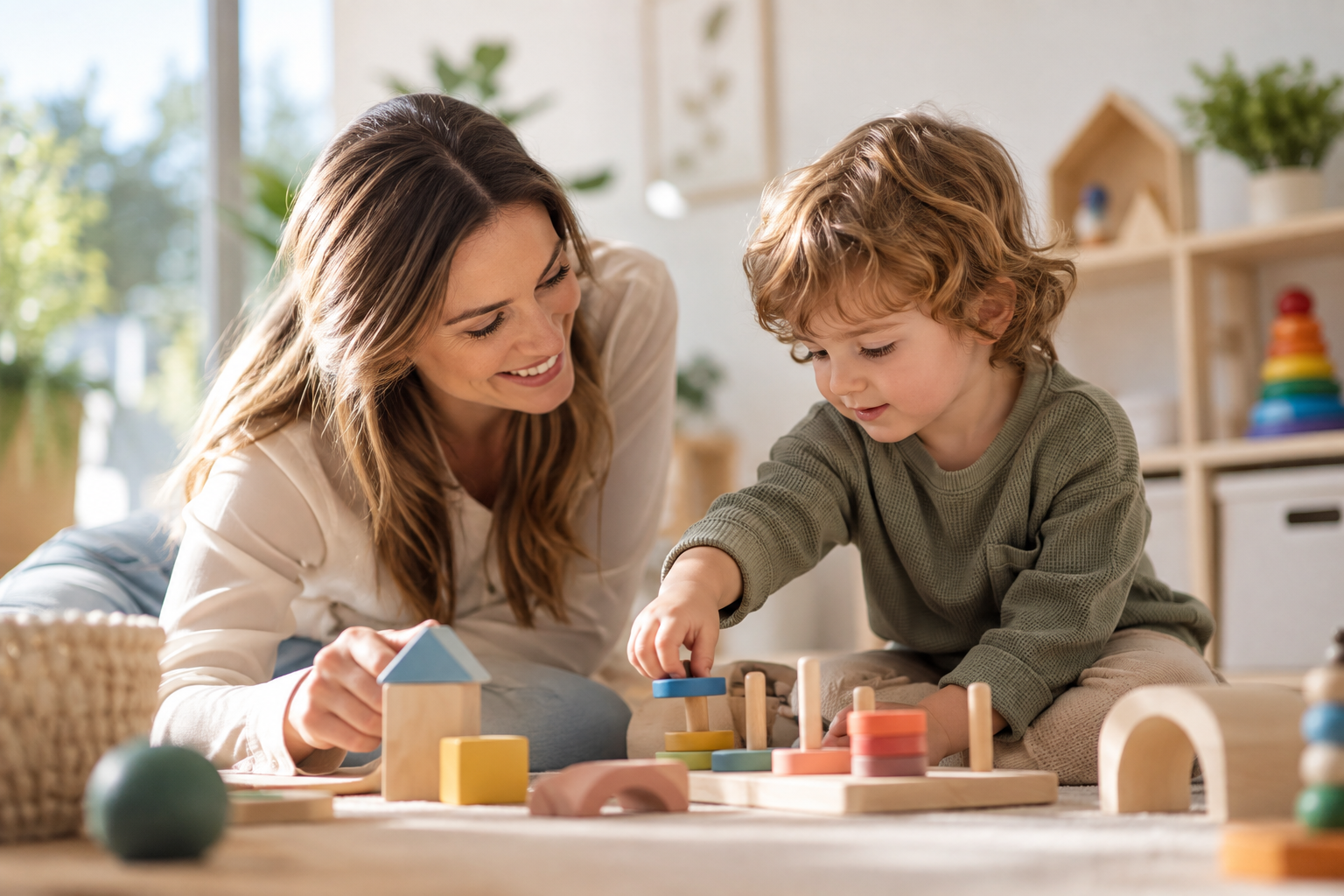
Play is another important part of development. It is not simply a break between learning activities. For young children, play is one of the main ways in which learning happens. Through play, children practise communication, problem-solving, imagination, attention, social interaction and emotional regulation. They learn how to take turns, copy ideas, solve small problems, create stories and include other people in their play.
When a child uses language to organise play, explain an idea or create a story, several areas of development are working together at the same time. Developmental guidance also recognises the importance of exploring, repeating, trying again, using new vocabulary and making links between play and real-life experiences. nn- EY DEVELOPMENT STATEMENTS B…
This is why it is important to look at development as a connected system. Communication affects relationships. Regulation affects attention. Attention affects learning. Physical development supports exploration and independence. Play brings together communication, thinking, movement, emotions and social understanding.
A behaviour that looks simple on the surface may therefore have a more complex reason behind it. A child who repeatedly leaves the table may not be avoiding learning. They may need movement in order to stay regulated. A child who does not answer a question may not be ignoring an adult. They may need more time to process the language. A child who becomes upset when an activity changes may not simply be “difficult”. They may need more predictability, visual support or preparation for transitions.
Professional observation is about understanding what may be happening underneath the behaviour, rather than only describing what can be seen.
In early development, we often use a best-fit approach. This means that we do not expect a child to fit perfectly into one developmental age band. Instead, we look at the skills the child shows most consistently and build a picture of their current development. A child may show advanced skills in one area, emerging skills in another and require more support somewhere else. Developmental statements can therefore be selected, adapted and combined to reflect the individual child more accurately. nn- EY DEVELOPMENT STATEMENTS B…
The purpose of developmental observation is not only to identify where a child is now. The more important question is what the next realistic step should be.
If a child shows interest in other children but does not yet join shared play easily, the next step may not be expecting long periods of group play. It may begin with watching another child, sharing an object, copying a simple action or joining a short activity together. Once that becomes comfortable, the interaction can slowly become longer and more complex.
This is the approach we value at NeuroNest.
Developmental guidance gives us a useful structure, but the child always comes first. We look at how the child communicates, understands, plays, regulates, moves, interacts and learns. We look at strengths as well as areas where more support may be helpful.
The most useful question is not simply, “What should a child of this age be able to do?”
A better question is, “What is this child showing us now, and what support will help them take the next meaningful step?”
That is where effective early intervention begins.
Latest Posts
- How children make sense of the world through their senses
- How your baby learns about the world through their senses
- Helping your child grow stronger through movement and play
- Understanding How Early Intervention Helps Children Learn, Move, and Connect
- How to Recognise Tactile Defensiveness and Help Your Child Feel Safe
- Understanding Feeding Challenges and How to Support Your Child at Home
- Let’s Talk Sitting: Exploring Floor Seating Options
- Retained Primitive Reflexes: The Hidden Cause Behind Developmental Struggles
- Where Curiosity Blossoms: How Children's Play Nurtures Growth for All
- Helping Your Child Through Stress: A Gentle Guide for Parents
- Sweet Little Lies – How to Recognise and Respond with Care
- Chores Are More Than Just Tasks – They’re a Tool for Growing Independence, Focus, and Confidence
- How to Help Children Develop Emotional Intelligence
- Blending Technology and Care: How VR Meta Quest Supports Children at NeuroNest
- A simple guide for parents who want to raise confident, happy children
- Setting Boundaries with Love: A Simple 3-Step Guide for Parents
- Understanding Behavior Through the Nervous System
- A Compassionate Lens on Dysregulation in Non-Speaking Autistic Individuals
- Supporting Development Through Movement: The Role of the Swing in Early Intervention
- Blending Tradition and Innovation: How NeuroNest Supports Your Child’s Unique Journey
- When Movement Meets Innovation: Supporting Child Development with GoBalance
- Why Visual Perception Matters for Everyday Life and Development
- Benefits of Chess in Early Intervention
- Building Healthy Nutrition from the Start
- A Journey Back to Your True Self
- Supporting Your Child’s Hand Skills for Confident Writing
- Blending the Best of Both Worlds
- Helping Toddlers Eat Well: A Parent’s Guide
- Why Tummy Time Matters for Your Baby's Development
- Helping Your Child Build Everyday Independence
- Who Are the Disconnected Kids?
- From First Tries to Automatic Habits: Understanding the Stages of Skill Learning
- Why a Child’s Level of Alertness Matters for Memory and Learning
- Early brain development starts before birth
- Why Slowing Down, Adapting Tasks, and Adding Breaks Helps Children Learn Better
- Why ADHD, Autism, Dyslexia and Other Challenges Need a New Approach
- The surprising power of copying in child development
- Books are more than just language tools—they’re powerful allies in sensory and motor development.
- Rethinking sensory support: moving beyond expensive rooms toward everyday understanding.
- Understanding how fear develops in a child’s brain
- Understanding how an early baby reflex can affect your child’s daily life
- A gentle start into baby development through movement and bonding
- A child-centred, research-informed approach that uses the power of play to support communication, emotional regulation, motor development, and meaningful growth from infancy to twelve years.
- Why Rising Autism Diagnosis Rates Do Not Indicate an Epidemic
- ADHD in the Classroom: Practical Strategies That Support Attention, Engagement and Learning
- OCD in Children and Adolescents: Early Signs, Impact and Evidence-Based SupportOCD in Children and Adolescents: Early Signs, Impact and Evidence-Based Support
- Understanding the Whole Child in Early InterventionUnderstanding the Whole Child in Early Intervention
Our Partners



Our Memberships