Therapeutic Play at NeuroNest: How Play Becomes a Pathway to Development, Connection, and Regulation
Author: Kristina Rautek Potocnik, BA (Hons) Ed. Rehab., HDip Early Childhood Studies, MA Early Intervention & Inclusion, Cert. Play Therapy | SI | ASD | Reflexes | ABA | ongoing MSc SLT | ongoing MA Therapeutic Pedagogy | ongoing MSc in Clinical Neuropsychology and Neuroeducation
What Is Therapeutic Play in NeuroNest?
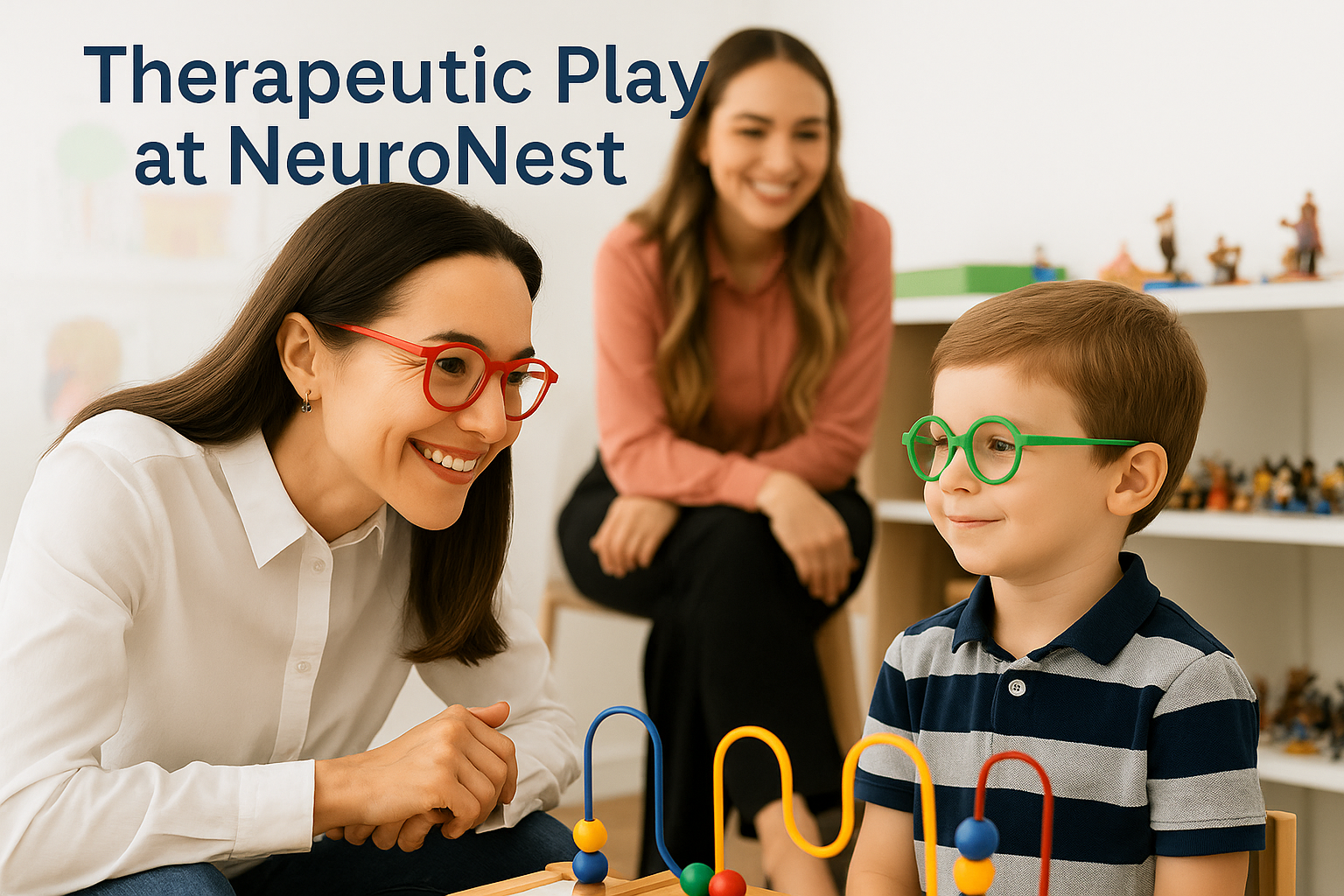
Therapeutic play at NeuroNest Early Intervention is far more than an enjoyable activity for a child. It is a professionally guided and purposefully planned intervention where play becomes the main channel for development, communication, and regulation. Play is the child’s natural language. Through play, children show what they feel, how they think, how they move through space, and how they connect with others. For this reason, therapeutic play is one of the key approaches we use with children from birth to age twelve.
At NeuroNest, we work with children with a wide range of developmental needs and diverse profiles of functioning. Some children are on the autism spectrum; others experience dyspraxia, sensory processing differences, developmental delays, or challenges in social communication. We also support children who find it difficult to regulate their emotions, who experience frustration, impulsivity, or more complex behavioural patterns. Many children present with a combination of needs, unique learning styles, and specific areas that require additional support. Across all these profiles, therapeutic play remains our most powerful tool because it allows each child to regulate, explore, communicate, and grow in the way that feels most natural and meaningful to them.
Therapeutic Play in Early Intervention
In the earliest years of life, a child’s brain forms neural connections at the fastest rate. Children learn through touch, movement, rhythm, eye contact, repetition, and the experience of emotional safety. Therapeutic play for infants and toddlers includes gentle tactile stimulation, supportive body positions, face-to-face interaction, simple imitation games, sensory-rich experiences, and rhythmic movement that supports the integration of body and brain.
The goal is not to “teach skills” in a direct or instructional way. Instead, the aim is to create conditions in which the child’s nervous system can organise and stabilise itself. When the child is regulated, everything else becomes possible: attention, speech, motor skills, and social communication can emerge naturally.
Therapeutic Play and Therapeutic Pedagogy
Our approach is grounded in early intervention principles, developmental neuropsychology, and therapeutic pedagogy. In therapeutic pedagogy, play is the medium through which the child gains safety, structure, autonomy, and a sense of success. The therapist guides the process, but the child remains an active participant who discovers, explores, and builds skills through meaningful experiences. Every interaction is intentional and clinically informed, yet still joyful and centred on the child’s pace and interests.
What Therapeutic Play Is Not
Therapeutic play is not psychotherapy, even though it consistently reduces stress, supports emotional expression, and strengthens the child–adult relationship. It is not occupational therapy, even though it incorporates sensory-motor experiences that help with daily functioning. And it is certainly not “just play.” Every session is built on assessment, guided by clear goals, and delivered with professional expertise.
Therapeutic play stands as an internationally recognised approach that supports children from their earliest years to pre-puberty. At NeuroNest, we use it at a specialised level, integrating developmental science, sensory regulation, emotional safety, and child-centred pedagogy. This allows us to meet each child where they are and offer a structured, intentional pathway toward genuine developmental progress.
A Closer Look at the Tools and Methods Used in Therapeutic Play at NeuroNest
Every material in our environment has a purpose. Nothing is chosen at random. Textures, movements, colours, sounds, and tactile experiences are selected because they support a specific area of development. When a child enters the space, they are not simply playing with equipment. They are participating in a structured, research-informed process that helps their brain and body become more organised, regulated, and connected.
Sensory Tools and Multisensory Experiences
Sensory tools help regulate the nervous system and improve the child’s capacity to process different types of input. Children explore a variety of tactile materials—soft, rough, warm, cool—at their own pace. Sensory balls offer deep pressure and proprioceptive feedback, while vibrating pads and rollers help the child either settle or gently activate their system. Swings of different types provide rhythmic vestibular input that supports balance and emotional regulation. Tunnels, crawl bags, and climbing structures encourage movement, strengthening body awareness and spatial orientation.
Visual experiences, such as light panels or soft projections, help children calm or re-engage, while sensory bins with beans, rice, foam, water, or kinetic sand provide rich opportunities for exploration and fine motor development. These experiences soothe overstimulated children, help under-responsive children become more alert, and prepare all children for deeper engagement and learning.
Tools Supporting Gross and Fine Motor Development
Therapeutic play at NeuroNest integrates a wide range of movement-based tools that strengthen coordination, motor planning, and confidence. Children roll, climb, jump, balance, and navigate obstacle courses, all of which strengthen bilateral integration and spatial awareness. Fine motor skills are supported through playful tasks using tweezers, tongs, clips, playdough, clay, or construction toys.
For children with dyspraxia, we use structured but joyful activities that require sequencing, rhythm, imitation, and problem-solving. These experiences support smoother, more organised movement and gradually increase confidence and independence.
Communication Tools Integrated Into Play
Communication is at the heart of therapeutic play, especially for children on the autism spectrum or those with delayed language development. We naturally incorporate LÁMH signing, PECS, simple visual schedules, and “first–then” supports. Social stories are turned into interactive play experiences, helping children understand concepts in a concrete way. We encourage shared attention, imitation, turn-taking, and symbolic play through dolls, figurines, and everyday routines.
Throughout each session, we model rich language with expansion, repetition, and parallel talk. The child is never pressured to speak—they are supported to communicate in whatever way is meaningful for them.
Tools for Emotional Regulation and Calming
Emotional regulation is woven into every session. Soft toys, therapeutic dolls, and calm-down materials help children express emotions safely. Our calm space includes cushions, weighted blankets, and noise-reducing headphones for moments when the child feels overwhelmed. Breathing practices are taught through bubbles, feathers, and playful imagery. Creative tools like drawing, painting, or playdough help children express feelings non-verbally. Role-play allows them to practise social situations and build emotional understanding.
Over time, children learn to recognise their feelings and use regulating strategies with increasing independence.
Reflex Integration Through Play
When primitive reflexes remain active beyond infancy, a child may experience challenges with coordination, attention, handwriting, strength, and emotional stability. At NeuroNest, reflex integration is always done through playful, meaningful movement. Crawling through tunnels, rolling in blankets, rhythmic back-and-forth motion, midline crossing activities, balancing games, and gentle vestibular challenges all support brain–body organisation in a natural way.
Reflex work is never delivered as repetitive drills; it is playful, engaging, and respectful of how children learn best.
Practical Examples From NeuroNest Sessions
Therapeutic play looks different for every child.
For a child on the autism spectrum, sessions often begin with sensory activities that help regulate the nervous system. Joint attention, imitation, and symbolic communication are built through play routines supported by visual cues and LÁMH signs. Over time, the child becomes more connected, responsive, and confident.
For a child with dyspraxia, sessions focus on motor planning through crawling, climbing, following rhythmic patterns, and completing movement sequences. Fine motor play is woven naturally into each session. These experiences help the child move with more confidence and better organisation.
For children with emotional dysregulation, therapeutic play provides a safe space for big feelings. Sensory calming, stories, role-play, and creative expression help them understand and manage emotions in a healthy way.
For young children with language delay, play becomes a communication-rich environment. LÁMH signs, symbolic play, routines, and meaningful interactions help build vocabulary, sentence structure, and a joy for communication.
Across all profiles, the approach is the same: the child’s needs guide the session, and play gently leads them toward growth, balance, and connection.
Conclusion
Therapeutic play at NeuroNest is a holistic, research-informed, and deeply child-centred approach that supports development in an integrated and meaningful way. Through play, children regulate their bodies, build relationships, explore the world, learn new skills, and grow in confidence. This approach supports children from infancy through age twelve and adapts to each child’s unique profile and needs.
If you feel your child may benefit from this kind of support, you are welcome to contact NeuroNest Early Intervention in Waterford at info@neuronest.ie or visit www.neuronest.ie.
You can also reach us by phone at 087 142 4078. We are here to guide you, answer your questions, and work together to create a plan that truly fits your child.
Latest Posts
- How children make sense of the world through their senses
- How your baby learns about the world through their senses
- Helping your child grow stronger through movement and play
- Understanding How Early Intervention Helps Children Learn, Move, and Connect
- How to Recognise Tactile Defensiveness and Help Your Child Feel Safe
- Understanding Feeding Challenges and How to Support Your Child at Home
- Let’s Talk Sitting: Exploring Floor Seating Options
- Retained Primitive Reflexes: The Hidden Cause Behind Developmental Struggles
- Where Curiosity Blossoms: How Children's Play Nurtures Growth for All
- Helping Your Child Through Stress: A Gentle Guide for Parents
- Sweet Little Lies – How to Recognise and Respond with Care
- Chores Are More Than Just Tasks – They’re a Tool for Growing Independence, Focus, and Confidence
- How to Help Children Develop Emotional Intelligence
- Blending Technology and Care: How VR Meta Quest Supports Children at NeuroNest
- A simple guide for parents who want to raise confident, happy children
- Setting Boundaries with Love: A Simple 3-Step Guide for Parents
- Understanding Behavior Through the Nervous System
- A Compassionate Lens on Dysregulation in Non-Speaking Autistic Individuals
- Supporting Development Through Movement: The Role of the Swing in Early Intervention
- Blending Tradition and Innovation: How NeuroNest Supports Your Child’s Unique Journey
- When Movement Meets Innovation: Supporting Child Development with GoBalance
- Why Visual Perception Matters for Everyday Life and Development
- Benefits of Chess in Early Intervention
- Building Healthy Nutrition from the Start
- A Journey Back to Your True Self
- Supporting Your Child’s Hand Skills for Confident Writing
- Blending the Best of Both Worlds
- Helping Toddlers Eat Well: A Parent’s Guide
- Why Tummy Time Matters for Your Baby's Development
- Helping Your Child Build Everyday Independence
- Who Are the Disconnected Kids?
- From First Tries to Automatic Habits: Understanding the Stages of Skill Learning
- Why a Child’s Level of Alertness Matters for Memory and Learning
- Early brain development starts before birth
- Why Slowing Down, Adapting Tasks, and Adding Breaks Helps Children Learn Better
- Why ADHD, Autism, Dyslexia and Other Challenges Need a New Approach
- The surprising power of copying in child development
- Books are more than just language tools—they’re powerful allies in sensory and motor development.
- Rethinking sensory support: moving beyond expensive rooms toward everyday understanding.
- Understanding how fear develops in a child’s brain
- Understanding how an early baby reflex can affect your child’s daily life
- A gentle start into baby development through movement and bonding
- A child-centred, research-informed approach that uses the power of play to support communication, emotional regulation, motor development, and meaningful growth from infancy to twelve years.
- Why Rising Autism Diagnosis Rates Do Not Indicate an Epidemic
- ADHD in the Classroom: Practical Strategies That Support Attention, Engagement and Learning
- OCD in Children and Adolescents: Early Signs, Impact and Evidence-Based SupportOCD in Children and Adolescents: Early Signs, Impact and Evidence-Based Support
Our Partners



Our Memberships